How Salt Lake Hard Water Impacts Your Plumbing & Water Heater
Salt Lake City water contains high concentrations of dissolved calcium and magnesium minerals. Learn how calcification degrades heating elements and how to protect your home.
Why Is Water So Hard in Salt Lake City?
Hard water along the Wasatch Front originates from mountain snowpack melting through limestone and mineral-rich rock formations. As water flows into Salt Lake City municipal reservoirs, it absorbs dissolved calcium and magnesium ions, measuring between 10 and 20 grains per gallon (GPG)—classifying it as very hard to extremely hard water. For immediate 24-hour service or property safety guidance, contact a Salt Lake City 24/7 Plumber.
How Hard Water Affects Water Heating Systems
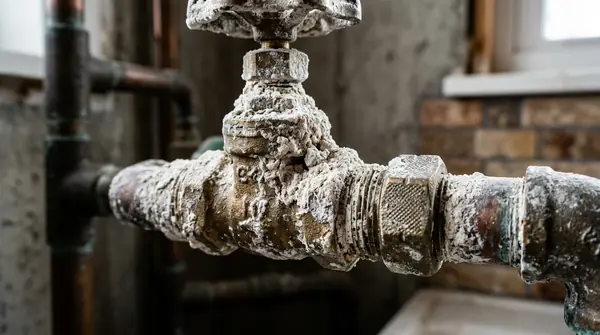
When hard water is heated inside a conventional storage tank or tankless heat exchanger, dissolved minerals precipitate out of solution and settle as solid calcium scale:
- Element Burnout: Mineral scale coats electric heating elements, trapping heat and causing elements to overheat and fail prematurely.
- Tank Popping Noises: Trapped water underneath thick bottom sediment boils, creating popping or rumbling sounds during heating cycles.
- Tankless Flow Restriction: Scale calcifies inside narrow tankless copper heat exchanger coils, restricting water flow and causing system error codes.
- Reduced Energy Efficiency: A 1/2-inch layer of mineral scale forces water heaters to consume up to 25% more energy to heat domestic water.
Effects on Pipes, Faucets, and Fixtures
Beyond water heaters, mineral calcification impacts household fixtures and plumbing pipe interiors:
- Clogged Faucet Aerators: Crusty white scale restricts water flow at sink aerators and showerheads.
- Stuck Valve Cartridges: Mineral deposits wear down rubber O-rings and ceramic cartridges inside shower and faucet valves, leading to persistent drips.
- Pinhole Corrosion: Mineral buildup can accelerate galvanic corrosion inside older copper and galvanized steel water lines, which often requires whole-home PEX repiping to restore clean water flow.
Practical Hard Water Protection Strategies
Salt Lake City homeowners can take proactive steps to extend plumbing component lifespan:
- Schedule Annual Water Heater Flushes: Draining and flushing storage tanks removes un-calcified mineral sediment before it hardens, best addressed by scheduling professional water heater maintenance and tank flushing.
- Descaling Tankless Systems: Flushing tankless heat exchangers with a mild descaling solution clears internal coil scale.
- Install Water Conditioning: Whole-home water softeners exchange calcium and magnesium ions for sodium or potassium ions, protecting all household plumbing.
Frequently Asked Questions
Why is water so hard in Salt Lake City?
Salt Lake City municipal water originates from snowpack runoff melting through limestone mineral deposits in the Wasatch Mountains, absorbing high levels of dissolved calcium and magnesium ions.
How does mineral scale damage water heaters?
As water heats inside a storage tank, dissolved minerals settle to the bottom. This thick layer of sediment insulates the heating element, causing overheating, popping noises, and premature tank failure.
How can I prevent hard water damage in my home?
Preventative solutions include scheduling annual water heater tank flushes, installing whole-home water softeners, and cleaning faucet aerators with white vinegar to dissolve calcium crust.
Need Water Heater Servicing or Flush Assistance?
Call Salt Lake Plumbers at (385) 488-0770 to speak with a water heater specialist today.
Call 24/7: (385) 488-0770